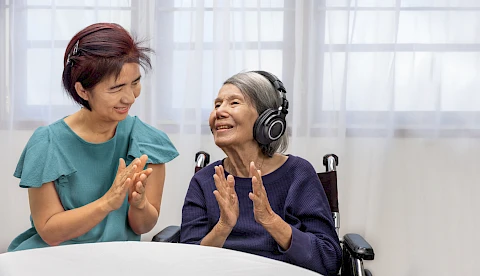
Parkinson’s disease gradually alters movement, often leading to tremors, stiffness, slowed motion, and changes in balance that can also affect mood and daily routines. Music therapy complements clinical care by drawing on the connection between rhythm, the brain, and the body. Research shows that steady musical cues can help regulate movement, improve gait and coordination, and encourage more fluid motion while also easing anxiety and apathy. Through structured listening, singing, or rhythm-based activities, music can introduce consistency, spark memory, and support both physical function and emotional well-being in a natural, familiar way.
What is Music Therapy?
Music therapy uses music to address physical, emotional, cognitive, and social needs under the guidance of trained therapists. For individuals with Parkinson’s disease, it focuses on rhythm, melody, and harmony to support motor function and cognitive processing. Sessions are often personalized and may include singing, playing instruments, or listening to music to improve coordination and encourage self-expression.
Rhythm and Movement: Enhancing Motor Skills
Research has shown that rhythm can greatly affect movement and coordination in individuals with Parkinson's disease. Music with a strong, steady beat helps patients initiate movement and maintain a consistent pace.
Clapping or tapping along to music with a clear beat and other exercises can be done at home to aid movement. Dance classes that incorporate music are also beneficial.
Emotional and Psychological Benefits
Music is a powerful tool for influencing mood and reducing anxiety. For Parkinson's patients, who may experience depression or stress, music therapy provides much-needed emotional support. Engaging with music releases dopamine, a brain chemical that enhances mood and motivation.
Techniques such as listening to calming music or creating playlists of favourite songs can support emotional well-being, providing comfort on challenging days.
Incorporating Music into Daily Life
Music therapy's beauty lies in its simplicity, making it easy to incorporate into everyday life. Music from one's youth or favourite songs often creates particularly strong connections and positive responses. Encouraging regular movement by dancing or tapping along to music with a strong rhythm helps maintain motor skills while providing enjoyment.
Caregivers can help seniors select music by setting up easy-to-access playlists or music devices. When choosing music, consider personal tastes and preferences so that the experience is enjoyable and engaging.
Improving Overall Well-being
Beyond motor and emotional benefits, music therapy can enhance overall well-being in several ways. Participating in music-related activities can boost social interaction, as it often involves group sessions or classes. This interaction combats feelings of isolation that seniors with Parkinson's may face.
Engaging with music can stimulate cognitive function, offering mental challenge and engagement. Singing requires memory and concentration, which keeps the brain active.
Bringing Music Into Everyday Parkinson’s Care
Music therapy brings together rhythm, movement, and emotional connection in ways that align closely with how Parkinson’s disease affects the brain and body. Steady beats can help regulate gait and coordination, familiar songs can lift mood and spark memory, and simple daily practices—such as singing, clapping, or guided movement—can create structure and connection. Over time, these small, consistent interactions with music can shape a more responsive routine that addresses both physical symptoms and emotional well-being.
Bringing these benefits into a consistent daily routine often requires the right level of care and structure. Senior Helpers Surrey East offers specialized Parkinson’s Care alongside Companion Care and Personal Care, helping seniors in Fort Langley, Walnut Grove, Bedford Landing, Sullivan Heights, and Clayton Heights integrate music-based activities into their day. Connect with our team to learn how personalized in-home care can incorporate music in ways that align with each individual’s needs and preferences.