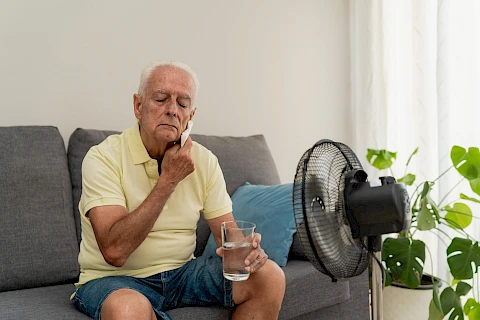
Heat illness moves fast, and seniors can decline from feeling a little warm to needing emergency care within an hour or two. As a caregiver, knowing how to recognize the stages of heat illness and respond at each one is one of the most useful skills you can carry into the summer months. The warmer stretches along the lake can be deceptively manageable in the morning and dangerous by mid-afternoon.
Recognizing the Stages
Heat illness in seniors may come in three general stages, and the earlier you intervene, the easier the recovery.
Heat Cramps
These are the earliest signs of heat illness in seniors. Your loved one may complain of muscle cramps, particularly in the legs, abdomen, or arms. They are usually still alert, sweating, and able to speak normally. Move them to a cool space, offer water or an electrolyte beverage, and gently stretch the affected muscles.
Heat Exhaustion
Heat exhaustion is more serious. Look for heavy sweating, weakness, dizziness, nausea, headache, cool and clammy skin, a fast but weak pulse, and possibly fainting. Your loved one may be confused or unusually irritable. Move them immediately to the coolest place available, ideally air-conditioned. Lay them down with legs slightly elevated, loosen tight clothing, and apply cool damp cloths to the neck, armpits, and groin where major blood vessels are close to the skin. Offer small sips of cool water if they are alert enough to drink safely.
Heat Stroke
This is a medical emergency. Signs of heat stroke include a body temperature of 40 degrees Celsius or higher, hot and often dry skin with little or no sweating, a rapid and strong pulse, confusion or loss of consciousness, and possible seizures. Call 911 immediately. While you wait for emergency services, move your loved one to the coolest spot you have, remove unnecessary clothing, and cool the body aggressively with damp cloths, ice packs at the neck, armpits, and groin, or a cool bath if you can manage it safely.
The Public Health Agency of Canada provides detailed guidance on extreme heat response that's worth printing and keeping accessible.
Why Older Adults Are at Higher Risk
Several physiological changes raise the risk of heat illness in seniors. The body's ability to sense temperature change declines with age. Sweat glands also become less efficient, and many common medications, including diuretics, beta-blockers, certain antidepressants, and antihistamines, can interfere with the body's natural temperature control. Chronic conditions like heart disease, kidney disease, and diabetes add further risk.
Your loved one may not feel hot or thirsty even when their body is in trouble. This is why monitoring matters more than asking. Check on them more frequently on warm days, look at their colour and energy level, and watch how they're responding rather than relying on their own report.
Building an Emergency Response Plan
Before a hot stretch arrives, decide what you would do if seniors showed signs of heat illness. Know where the nearest cool space is in your home, where the closest emergency room is from your loved one's home, and which neighbours might check in if you can't reach them.
Keep your phone charged, save key numbers (your loved one's doctor, the nearest hospital, family emergency contacts), and consider a personal emergency response device for an older adult living alone. Knowing the plan before you need it makes execution much easier in a stressful moment.
Supporting Senior Safety Through the Season
Understanding heat illness is one of the most practical things a caregiver can carry into the summer. Senior Helpers Burlington supports families across Burlington, Alton Village, Millcroft, Lakeshore, and Roseland with in-home care that includes attentive monitoring during heat events and prompt response when something is off. Contact us to learn how we can support your family this summer.