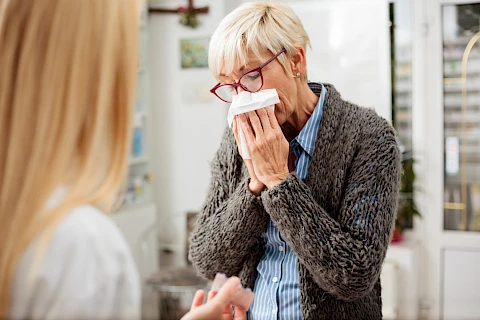
Most people assume that if seniors didn't have bad allergies at 50, they won't develop them at 75. That assumption is worth revisiting. Seasonal allergies can shift significantly with age, sometimes appearing for the first time in a person's senior years, sometimes intensifying after decades of mild symptoms, and sometimes becoming harder to treat because of drug interactions. For caregivers, understanding how seasonal allergies affect seniors helps you respond more effectively when spring arrives.
Why Allergy Patterns Can Shift in Older Adults
The immune system changes with age, a process researchers call immunosenescence. As immune function shifts, responses to triggers such as pollen, mold, and pet dander can change unexpectedly. Some seniors find that seasonal allergies they managed easily become noticeably worse; others develop new sensitivities. A senior who spent decades outdoors without problems may now find that the tree pollen season in April and May brings real discomfort.
Cross-reactivity is another factor that appears more frequently in older adults. Someone with a newly developed birch pollen allergy may also begin reacting to raw apples or stone fruits, a phenomenon known as oral allergy syndrome, and the connection may not be obvious until a healthcare provider points it out.
What to Do When Usual Remedies Stop Working
Caregivers often notice that a medication that relieved allergy symptoms in earlier years seems less effective. Over time, some degree of tolerance to antihistamines can develop. More often, though, the underlying issue is a change in the allergy itself, more triggers, higher sensitivity, or a different immune profile, rather than the medication simply wearing out.
Drug interactions become a significant concern for seniors managing multiple prescriptions. Many older adults take medications for blood pressure, heart conditions, or bladder control, and some interact directly with common allergy medications. Dry mouth, urinary retention, and cognitive confusion can be compounded when certain antihistamines are added to an existing regimen. Always run new allergy medications by a pharmacist or physician before starting them.
New Allergies in Older Age: What to Watch For
Seniors who begin experiencing nasal symptoms, eye irritation, or skin reactions in spring without a prior history of seasonal allergies deserve the same evaluation as anyone with new symptoms. Dismissing it as an unavoidable part of aging can delay effective treatment.
Signs that may indicate new or worsening seasonal allergies in seniors include:
- Sneezing, congestion, or watery eyes that appear around the same time each year
- Symptoms that improve when the senior stays indoors and worsen on windy days
- Itching in the nose, eyes, or throat without a cold or infection
- A new pattern of fatigue or poor sleep during pollen season
Tracking symptoms in a simple journal, noting dates, conditions, and severity, gives a physician far more to work with than a general "she's been sneezy lately."
Let Us Help Seniors Prepare for Allergy Season
Seasonal allergies that catch seniors by surprise are harder to manage than those they've prepared for. Senior Helpers Durham Region works with families across Ajax, Bowmanville, Clarington, Courtice, and Newcastle to provide consistent in-home care that keeps seniors comfortable and well-observed through seasonal changes. Contact us to learn how our team can support your loved one year-round.