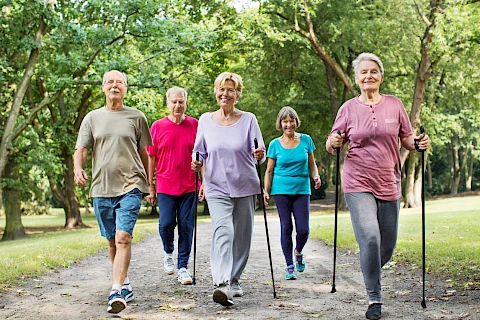
Walking is one of the simplest and most effective forms of exercise for seniors. It offers a wealth of benefits for the body and mind, making it an ideal choice for maintaining health and well-being. Learn the benefits and how caregivers can help establish walking programs for seniors to lead active, fulfilling lives with Senior Helpers. It is always best to consult healthcare providers before starting any new exercise regimen.
Physical Benefits of Walking
Walking regularly has numerous physical benefits for seniors. Here are a few;
- Cardiovascular Health - Walking helps lower blood pressure, improve circulation, and reduce the risk of heart disease or stroke.
- Muscle Strength and Flexibility - Walking enhances muscle strength and joint flexibility, which are crucial for daily activities.
- Balance and Mobility - Walking improves balance and coordination, reducing the risk of falls, a common concern for seniors.
- Energy and Stamina - Walking strengthens immunity, increases endurance, and leads to better sleep and more energy.
Cognitive Benefits of Walking
Walking also provides several cognitive benefits. Here are some ways it makes a difference:
- Boosts Mood - Walking acts as a natural mood enhancer and can significantly reduce anxiety and depression.
- Mental Clarity - Walking has been linked to a lower risk of cognitive decline, helping maintain mental sharpness with age.
- Problem-Solving - Walking strengthens neural connections, which helps boost memory, creativity, and problem-solving skills.
- Social Opportunity - Walking offers the opportunity to interact with others, which is crucial for mental and emotional well-being.
Safety Considerations for Senior Walkers
Seniors should wear proper footwear that provides good support and comfort when walking. Loose, comfortable clothing suitable for the weather is also recommended. Choose safe, accessible routes free from traffic and obstacles. Caregivers should keep an eye on the weather and ensure that seniors stay adequately hydrated, especially during warmer months.
Determining the Right Pace and Distance
Start by setting realistic walking goals. Seniors should begin with short, manageable distances and gradually increase as their endurance improves. Always listen to the body's signals. Walks should be paced to avoid overexertion, ensuring that seniors feel energized rather than exhausted afterward.
Adjustments should be made according to individual fitness levels and health conditions. A slower stroll may be ideal for those requiring low-impact options. Walking aids, such as canes or walkers, provide extra stability for those with mobility challenges.
How to Make Walks Enjoyable
Make walks more enjoyable by incorporating nature into the walking routine. Go to a local park and choose scenic routes for a refreshing outdoor experience. Many seniors find motivation in listening to upbeat music or favorite podcasts, turning their walk into an entertaining activity. Walking with friends or joining a community walking group adds a fun social component for seniors.
Senior Helpers Knows the Benefits of Walking for Seniors
Walking programs offer numerous benefits for seniors, enhancing physical health and mental well-being. Seniors who stay active through regular walks often enjoy a healthier, happier life. Senior Helpers provides quality, in-home senior care services with the health and happiness of our community's seniors in mind. If you live in the Alderwood, Applewood, or Cooksville areas, don't hesitate to contact us anytime at Senior Helpers Etobicoke & Mississauga East. We are here to support seniors as they enjoy the rewards of an active lifestyle.