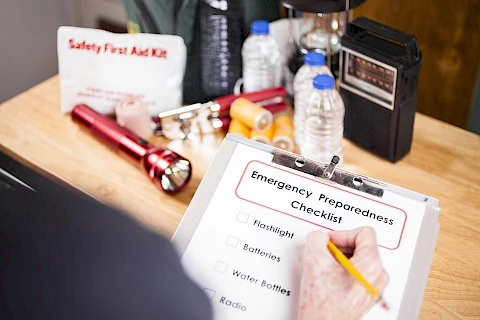
June is Safety Month, and for many families, it's a quiet reminder that emergency plans rarely get made until they're urgently needed. If your parent or senior loved one lives independently in Etobicoke, Port Credit, or Cooksville, now is a good time to sit down together and work through a plan before any crisis arrives.
When You Live Apart: Making the Distance Part of the Plan
The first thing most caregivers realize is that their current emergency plans are, at best, informal. "I'd call and check on her" is a starting point, not a plan. When you live separately from your senior relative, you need to know who is physically close to them and can act quickly. Write down two or three neighbours or friends near their home in Long Branch or Mississauga Valleys who have a key and know to watch for any unusual silence. Share your contact information with them. That network is often what bridges the gap when phone lines are jammed or roads are blocked during a weather event.
Store emergency contacts in two places: in your loved one's phone and on paper, taped inside a kitchen cabinet. Phones die, but paper doesn't.
Natural Disasters, Power Outages, and Medical Emergencies
Southern Ontario sees its share of ice storms and summer thunderstorms that knock out power for hours or days. For a senior living alone in Alderwood or Markland Wood, a power outage means more than inconvenience. It can affect medical equipment, heating, and refrigerated medications. Keep a written list of any electrical medical devices your loved one uses, and register with the local utility for their vulnerable-customer program. Toronto Hydro's Priority Access Registration is available for customers who rely on power for medical reasons.
A household emergency kit should be specific to your loved one's needs. This includes a minimum three-day supply of all prescription medications, copies of relevant health documents, a flashlight with fresh batteries, bottled water, and easy-to-open non-perishable food. Walk through the kit with them once a year, so its contents feel familiar rather than foreign.
Medical emergencies deserve their own sub-plan. Does your loved one know whether to call 911 or reach you first? In Dixie or Applewood, response times can vary. An agreed-upon decision rule removes confusion during a frightening moment.
Evacuation Planning That Actually Works
A generic evacuation plan ("just leave if told to") tends to fall apart when mobility or anxiety is involved. Talk through the specific barriers your senior relative would face. Can they get out of the house quickly if an exit is blocked? Do they know two different routes out of their neighbourhood in Eringate-Centennial-West Deane or Etobicoke West Mall? Identify a meeting point or a designated place they would go to, and make sure the location knows to expect them.
Arrange for transportation now. If your loved one cannot drive, confirm who in their contact list can come on short notice. Document that person's name and number in the emergency kit, not just in a phone.
Practice the plan at least once. A calm walkthrough on a regular afternoon reveals gaps that a rushed conversation never would.
Bringing Care and Preparedness Together
All of this planning becomes more manageable when your loved one has consistent, knowledgeable support in place year-round. Senior Helpers Etobicoke & Mississauga East serves families across Lakeview, Mineola, Port Credit, Applewood, and Long Branch. Our caregivers can help reinforce emergency plans, assist with kit preparation, and serve as a trusted first point of contact in uncertain situations. Contact us today to talk about how in-home care can give your whole family greater peace of mind.