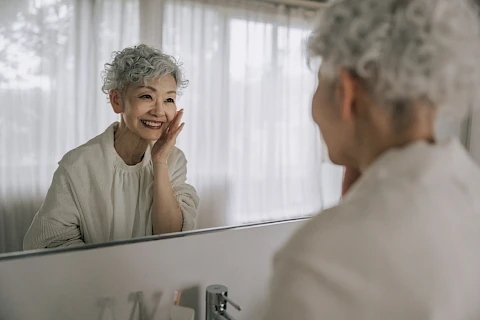
Skin changes are a normal part of aging. Skin may become thinner, drier, and more sensitive over time. It may also bruise more easily, heal more slowly, or react differently to products that once caused no problems. A simple daily routine helps keep aging skin clean, moisturized, and comfortable without requiring expensive products.
How Skin Changes With Age
Aging skin produces less natural oil and retains less moisture, which may cause dryness, flaking, or itching. Skin may also become thinner, making bruises and small tears more likely. Age spots and changes in moles may become more noticeable after years of sun exposure. Certain medications and health conditions can also affect the skin.
Because aging skin is thinner and holds less moisture, it may need a gentler approach to everyday care. Simple changes to bathing, moisturizing, and sun protection could help reduce irritation and keep skin comfortable.
Cleanse and Moisturize Gently
Use warm, not hot, water when bathing or washing your face, as hot water may worsen dryness and itching. Choose a mild, fragrance-free cleanser and avoid vigorous scrubbing. Pat skin dry with a soft towel, leaving it slightly damp before applying moisturizer. A basic, fragrance-free cream or ointment may help reduce dryness, flaking, and itching, particularly on the hands, elbows, lower legs, and feet. Apply moisturizer shortly after bathing and reapply as needed, but keep the areas between the toes dry. If a product causes burning, redness, or a rash, stop using it and ask a healthcare professional about other options.
Protect Skin From the Sun
Sun exposure contributes to skin aging and skin cancer. Use broad-spectrum sunscreen with SPF 30 or higher on exposed skin and reapply as directed. A wide-brimmed hat, sunglasses, lightweight clothing, and shade can provide additional protection. Health Canada offers sun safety guidance for protecting skin from ultraviolet radiation.
Check Skin for Skin Changes
Regular skin checks may help spot changes early. Check your face, scalp, ears, neck, hands, arms, legs, and feet, and ask for help with hard-to-see areas. Watch for:
- New or changing moles
- Sores that do not heal
- Repeated bleeding or crusting
- New growths
- Persistent rashes
- Thick, scaly patches
Discuss unusual or persistent changes with a doctor or dermatologist. Seek prompt medical attention if your skin becomes increasingly red, warm, swollen, painful, or produces pus.
Care for Dry and Sensitive Areas
Dryness and itching are common with aging, but persistent symptoms may need medical attention. Keep nails trimmed, moisturize regularly, and use a cool, damp cloth for temporary relief from itching. Fragrance-free detergent and soft clothing may reduce irritation. Check the skin for cracks, redness, swelling, or blisters. Ask a healthcare professional about ongoing itching or other skin concerns.
Make Everyday Skin Care Easier
Senior skin care is easier when products are simple to reach and use. Keep cleanser, moisturizer, and sunscreen in convenient locations. Pump bottles may be easier to handle than tight jars. Good lighting can help with skin checks, while a shower chair or grab bar may make bathing easier. Adjust the routine if the person needs help reaching, opening containers, or checking hard-to-see areas.
Keep Skin Care Simple
Aging skin does not require a complicated collection of products. Gentle cleansing, moisturizing, sun protection, and regular skin checks could help keep skin comfortable. Some older adults may need occasional help applying lotion, gathering supplies, or checking hard-to-see areas. Senior Helpers Etobicoke & Mississauga East provides in-home senior care, including personal care assistance, while respecting each person's preferences and independence. Contact us to learn about care in Alderwood, Applewood, Cooksville, Dixie, and Eringate-Centennial-West Deane.