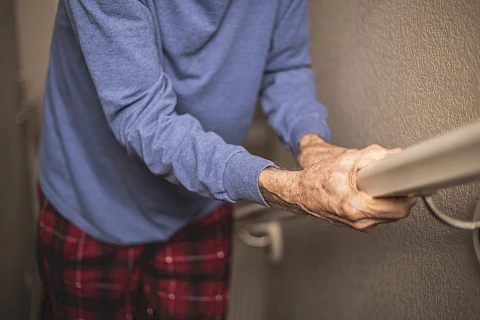
A senior who once stood up from a dining chair without support may now need to hold onto it for balance. Small changes like this can be easy to overlook during a busy family visit, yet they may signal declining strength or balance. During Fall Prevention Month in Canada, recognizing these early changes is especially important when understanding fall risk in seniors.
Changes in How Seniors Move
Observe how seniors walk across a room or move from one area of the house to another. Shuffling steps, a wider stance, or reaching for walls and furniture for support may signal weaker leg strength or balance problems worth discussing with a family doctor. Slower walking and difficulty getting out of a low armchair without pushing off with both hands can also signal changes in mobility.
Family members can also ask how seniors feel when using stairs. Some may start avoiding certain areas of the house, such as rooms that require climbing stairs, without mentioning the reason. Noticing these changes early can help families better understand fall risk in seniors.
A Near Miss Counts as a Fall Risk in Seniors
A stumble that ends with a quick grab of the railing still counts as a near fall, even when seniors choose not to mention it because they don't want to worry family members.
Family members can look for bruises on the shins or forearms, as well as marks on doorframes that may suggest a recent stumble. Any previous fall, even without injury, should be reported to a doctor. A history of falls is one of the factors health professionals consider when assessing future fall risk in seniors.
Fear of falling can also signal a problem. Seniors who stop walking to nearby stores or skip outdoor activities during pleasant weather may lose strength from reduced movement, which can further increase their fall risk.
Health and Medication Clues
Dizziness when standing up warrants a call to the doctor. New medications also deserve attention, as some can cause drowsiness or light-headedness. A pharmacist can review a senior's full medication list and identify possible side effects.
Vision and foot health also matter. Outdated glasses, cataracts, or dim lighting can make everyday steps more hazardous. Foot pain and worn-out slippers can also make it harder to maintain balance and walk safely.
The Public Health Agency of Canada lists common risk factors in its fall and injury prevention resources for older adults.
Clues Around the House
Walk through the home at night to see it from a senior's perspective. Look for dark hallways, loose mats, cords across the floor, and bathtubs without grab bars. Shoes and other household items can also create tripping hazards on narrow staircases.
Many safety improvements are inexpensive, such as adding night lights and placing non-slip mats in bathrooms. These small changes can reduce fall risk in seniors and make everyday movement around the home safer. For more ideas, Parachute offers fall prevention resources for older adults and caregivers.
We Help Keep Seniors Safe at Home
Fall risk in seniors can increase with icy walkways and missed steps in the tub, causing concern for family members. In Alderwood, Dixie, Etobicoke West Mall, Mineola, and Port Credit, Senior Helpers Etobicoke & Mississauga East accompanies seniors to appointments, tidies walkways, provides bathing support, and reports any changes they notice. Contact us, and we'll sort out a plan with you.