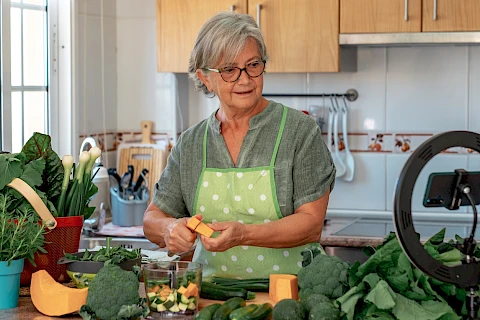
Butternut, acorn, delicata, kabocha, and the classic pie pumpkin all show up at North York markets by mid-September, and the smell of roasting squash is one of the true rewards of autumn cooking. There's just one problem. Those thick, waxy rinds are hard on aging wrists, and a slipped chef's knife on a rolling pumpkin has sent more than one Toronto senior to the emergency room. Here are six ways to keep the joy without the hazard.
1. Roast Them Whole
The easiest fix is to skip the cutting entirely. Pierce the squash a few times with a paring knife, set it on a baking tray, and roast at 200°C for 45 to 75 minutes depending on size. When a fork slides through easily, it's done. Let it cool, then split it open with almost no effort. Same flavour, none of the wrist strain.
2. Buy the Small Varieties
Big cheese pumpkins look impressive but wrestle like a curling stone. Delicata, honeynut, and small acorn squashes weigh a pound or two and cut like a firm cucumber. Delicata skin is thin enough to eat, which saves a peeling step. Honeynut tastes like butternut but comes in a size a small hand can hold.
3. Reach For Canned or Frozen
Pure canned pumpkin is one of the most underrated pantry items. It's just cooked, strained squash, ready for muffins, soups, pancakes, oatmeal, or a dog's food bowl. Frozen butternut cubes save every step of prep and taste nearly identical to fresh once roasted. There's no nutritional penalty, and there's no knife work.
4. Let a Store Do the Work
Most grocery stores in North York now stock pre-cut butternut squash in the produce section. It costs a bit more per pound, but if the alternative is a bandage and a call to Telehealth Ontario, it pays for itself. Farmers at Nathan Phillips Square and other Toronto markets will also cut a squash on request. Just ask.
5. Use a Better Tool for the Job
If you do cut squash yourself, put down the chef's knife and pick up a serrated bread knife or a small hand saw kept in the kitchen just for produce. Sawing beats chopping on hard rinds. Microwave the whole squash for 90 seconds first to soften the skin. Use a damp tea towel under the cutting board so nothing rolls, and cut on a flat side once you've made the first slice.
Dietitians of Canada notes at dietitians.ca that winter squash pack fibre, vitamin A, and potassium into an inexpensive package. The nutrition case is strong. The safety case is what usually keeps people from cooking with them.
6. Cook Once, Eat Three Times
A roasted squash gives you the base for a week of meals. Purée half into soup with an onion and stock. Cube the other half for a sheet-pan supper with chickpeas and olive oil. Freeze anything left. Batch cooking saves energy, cuts down on repeated prep, and turns one careful prep session into several easy dinners.
Bringing Fall Flavour to North York Kitchens
Squash season should feel like a pleasure, not a hazard, and small changes to how you shop and prep can make autumn cooking easier on the hands without giving up the foods you enjoy. Senior Helpers North York supports families right here in North York with meal preparation, grocery help, and safe kitchen assistance so older cooks can keep enjoying autumn produce. If a hand in the kitchen would make squash season easier, please contact us to talk about where a little extra help would make meal prep easier.