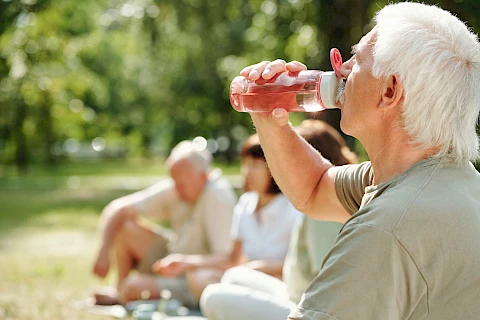
Ontario summers can be deceptively demanding. A pleasant afternoon can turn uncomfortable quickly when the humidity rises and the shade runs out. For seniors, the body's ability to regulate temperature slows with age, meaning overheating may develop more quickly and with fewer obvious warning signs than in younger adults. Recognizing the early signs and responding promptly can make a significant difference.
Early Warning Signs to Watch For
By the time seniors say they feel overheated, the process has often been underway for a while. The earliest signs of overheating in seniors tend to be subtle, but here are warning signs to watch for:
- Flushed or reddened skin, even in the shade
- Quietness or withdrawal from conversation
- Heavier breathing than usual
- Complaints of a headache or feeling "off"
- Confusion or a slower response in conversation than normal
- Unusual fatigue or reluctance to move
These indicators are easy to miss if your loved one tends to minimize discomfort. Check in regularly on hot days rather than waiting for them to speak up. Gently touch the back of their neck; if it feels very warm or they seem clammy, take it seriously.
More Visible Signs of Heat Exhaustion
As heat stress progresses toward heat exhaustion, the signs of overheating in seniors become more obvious:
- Heavy sweating
- Pale, cool, or clammy skin
- Weakness or muscle cramps
- Nausea or dizziness
- Fast, weak pulse
If a loved one shows these signs while spending time outdoors or in a warm backyard, take action immediately. Move them to a cool, air-conditioned space, offer small amounts of cool water, and apply a cool, damp cloth to the neck and forehead. Do not leave them alone until they've cooled down and are feeling more like themselves.
Encouraging Breaks and Hydration Without a Battle
Some seniors resist being told to go inside or drink more water. A few approaches that tend to work better in preventing overheating in seniors include:
- Make it an invitation, not a request. "I was just going to get some lemonade. Do you want to come inside for a bit?" lands much better than "You need to come in, it's too hot."
- Offer appealing cold drinks. Iced herbal tea, a smoothie, or sparkling water with cucumber often gets a better response than a plain glass of water. Older adults sometimes lose their sense of thirst, so something flavourful prompts more regular drinking.
- Create a shaded retreat. If your loved one enjoys being outside, a shaded spot with a fan and cold drinks makes outdoor time more sustainable. Check in every 20 to 30 minutes on very hot days rather than every hour or two.
When to Call for Emergency Help
If your loved one's skin becomes hot and dry rather than clammy, if they become confused or lose consciousness, or if their temperature appears to be rising despite your efforts to cool them down, call 911. Heat stroke is a medical emergency and requires immediate professional care.
Keeping Your Loved One Safe Through Every Warm Day
Ontario summers are worth enjoying, and with a little vigilance, they can be. Senior Helpers Oakville and Burlington supports families across Oakville, Burlington, Bronte Village, Mississauga, and Kerr Village with in-home care that includes regular check-ins, hydration support, and attentive companionship on hot summer days. Contact us to learn how we can help your loved one stay cool and safe this summer.