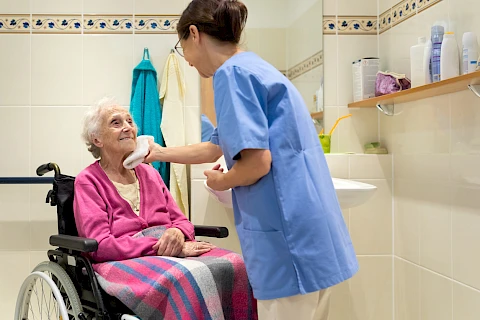
Personal hygiene looks different for every senior. Bathing, oral care, skin care, nail care, and clean clothing all contribute to comfort and well-being, but routines may need to change as mobility, energy, skin condition, or personal preferences change. A routine that works well for one person may feel tiring, uncomfortable, or impractical for another, so personal care should reflect individual needs and preferences.
Choose a Bathing Routine That Feels Comfortable
No single bathing schedule works for everyone. Older skin often becomes drier and more sensitive, so frequent hot showers may cause irritation. Some seniors prefer bathing several times a week, while others bathe more often. Between full baths or showers, washing areas such as the face, underarms, and groin can help a person feel fresh. Use warm water and mild soap, then gently pat the skin dry. Safety aids such as a shower chair, grab bars, and a nonslip mat can make bathing safer for someone with balance or mobility concerns.
Make Oral Care Part of the Daily Routine
Brushing twice a day helps remove plaque and food particles from teeth and gums. Flossing, or another dentist-recommended method, between teeth may also help keep the mouth clean.
Dentures need regular cleaning, too. Remove them as directed, clean them with appropriate products, and store them safely when you are not wearing them. A dentist should check persistent mouth pain, bleeding gums, sores, dry mouth, trouble chewing, or dentures that no longer fit comfortably.
Keeping a toothbrush, toothpaste, floss, and denture supplies together may make the routine easier to follow.
Care for Skin, Hair, and Nails
Aging skin may become thinner and drier, so gentle care may help prevent irritation. After bathing, apply moisturizer while the skin is still slightly damp, and check for redness, cracks, sores, swelling, bruising, or wounds that do not heal.
Trim fingernails and toenails with clean tools and good lighting. Thick, painful, ingrown, or hard-to-reach toenails may require care from a podiatrist.
Hair care should also reflect personal preferences and hair type, with washing, brushing, and grooming done as often as feels comfortable.
Adapt Hygiene Routines to Individual Abilities
A senior may handle most hygiene tasks independently but need help with activities such as getting into the shower or washing hard-to-reach areas. Since these needs may change from day to day, ask what assistance is wanted before stepping in. Give the person privacy during bathing and dressing, and let them choose their toiletries, clothing, and grooming products whenever possible. If a routine feels tiring, break it into smaller tasks, such as bathing in the morning and washing hair later. Discuss any sudden change in strength or ability, confusion, pain, dizziness, or difficulty with personal care with a healthcare professional.
Personalized Hygiene Care at Home
Healthy hygiene habits should fit a senior's abilities, comfort, and preferences rather than follow a rigid routine. Simple changes to the bathroom, daily schedule, and level of assistance may make personal care easier while allowing seniors to remain involved in their own routines.
When bathing, grooming, or other personal care tasks become harder to manage alone, having the right assistance may make everyday routines more comfortable without taking away a senior's independence. Senior Helpers Oakville and Burlington provides personalized in-home personal care for seniors in Hamilton, River Oaks, Morrison, Burlington, and Bronte Village. Contact us to discuss the type of assistance that could make personal care easier for you or a loved one.