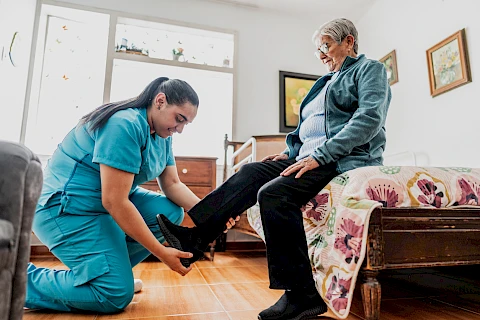
Feet do quiet work over a lifetime, and they often need more attention with age. Senior foot care can help address sore heels, thick nails, dry skin, or loss of sensation before these issues become more serious.
Add Feet to the Daily Check
Feet tell stories. During a relaxed moment in Peterborough, ask your parent if their feet hurt, feel numb, or feel different in their shoes. Look at the tops, soles, heels, and spaces between toes.
Use good light. A hand mirror can help when bending is difficult, and a quick check after socks come off may fit naturally into the evening. Health Canada shares information about diabetes that can support a discussion about foot concerns with the care team.
Look for changes. Redness, swelling, blisters, cracks, cuts, drainage, colour changes, or a sore that will not heal needs attention. People with diabetes or circulation concerns may need more frequent checks.
Choose Shoes For the Day
Check the inside. Before a shoe goes on, look for a pebble, rough seam, curled insole, or anything else that could rub the foot. This check takes seconds and can spare a painful surprise.
Aim for a secure fit. Shoes should have a stable sole, room at the toes, a firm heel, and a fastening that stays put. In Peterborough, a stable walking shoe may suit an errand or a stroll better than a loose-backed slipper.
Watch the socks. They should be clean, dry, and comfortable, without elastic that leaves deep marks. Ask a clinician or foot-care professional about changes in swelling or fit.
Treat Nails and Skin Gently
Dry between the toes after washing. Pat the feet gently and apply moisturizer to dry skin, avoiding the areas between the toes. Thick, curved, or difficult-to-reach nails may require professional senior foot care.
Skip home surgery. Do not cut corns, calluses, or ingrown nails yourself, since treatments can irritate delicate skin or create a wound. A podiatrist, nurse, or family doctor can assess the issue.
Make a note. If your parent mentions a tender spot, write down where it is and when it started (the left shoe can be marked with a small sticker). That detail helps at an appointment.
Call Before a Small Issue Grows
Do not wait. New wounds, spreading redness, warmth, sudden swelling, severe pain, or a change in foot colour all call for a healthcare provider. If your parent has diabetes, a sore or possible infection needs prompt advice.
Offer safe help. If your parent cannot reach their feet without stretching or balancing unsafely, help with socks and shoes or arrange regular support. Their preferences should direct every step.
Replace worn pairs. Shoes with worn soles or that slide at the heel should be removed from the rotation. Comfortable feet make walks, errands, and everyday movement more workable.
Steadier Steps in Peterborough
Start with one call. We can discuss support with the parts of senior foot care that have become more difficult.
Regular checks, clean socks, and well-fitting shoes can help protect comfort and mobility. Contact us to discuss in-home care support.
Serving families in Peterborough, our caregivers can provide regular help with socks, shoes, and other daily tasks that may have become difficult while keeping your parent involved in decisions about their comfort and mobility.
Our caregivers can also help notice small changes that may be easy to miss when family members live in separate homes and share busy schedules. They can communicate those observations to you respectfully.