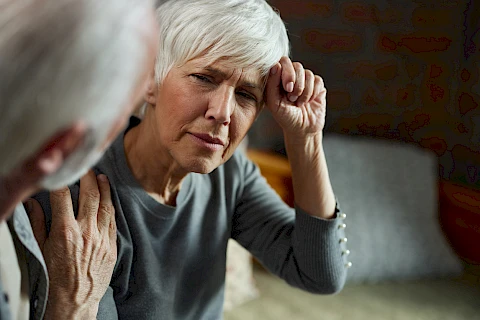
May is Stroke Awareness Month, and for family caregivers, it's a good time to revisit what stroke warning signs actually look like in seniors. A stroke happens when blood flow to part of the brain is interrupted, and the outcome depends heavily on how quickly treatment begins. Knowing what to watch for and acting without hesitation ranks among the most valuable actions a caregiver can take.
The FAST Warning Signs
The acronym FAST remains the most widely recognized guide for identifying stroke symptoms, especially in seniors, and for good reason.
- Face drooping. Ask your loved one to smile. If one side of the face droops or appears uneven, that's a warning sign.
- Arm weakness. Ask them to raise both arms. If one arm drifts downward or can't be raised, take it seriously.
- Speech difficulty. Slurred speech, garbled words, or an inability to repeat a simple sentence clearly can all indicate stroke.
- Time to call 911. If any of these signs appear, call emergency services immediately. Do not wait to see if symptoms resolve on their own.
Symptoms can also include sudden confusion, trouble seeing in one or both eyes, a severe headache with no known cause, or sudden difficulty walking or maintaining balance. These signs warrant an emergency call rather than a wait-and-see approach.
Signs That May Indicate Higher Stroke Risk in Seniors
Some changes in seniors’ health or behaviour can signal a higher stroke risk, even before an acute event occurs. These aren't causes for alarm on their own, but they're worth discussing with a physician.
- Newly diagnosed or poorly controlled high blood pressure or atrial fibrillation
- A transient ischemic attack (TIA), sometimes called a ‘mini-stroke,’ wherein symptoms appear briefly and resolve on their own
- Increasing difficulty with balance or coordination that wasn't present before
- Sudden changes in vision, even if they seem to come and go
- A history of smoking, diabetes, or high cholesterol that hasn't been well managed
A TIA in particular deserves immediate medical attention, even when symptoms have already passed. It is often a warning that a more serious stroke may follow.
How to Stay Prepared
Caregivers who have already walked through an emergency know how disorienting it can be in the moment. A little preparation helps. Keep a one-page medical summary for your loved one that includes their diagnoses, current medications and dosages, allergies, and their doctor's contact information. Store a copy in their wallet and one at home in a visible location.
Know the fastest route to the nearest hospital emergency department before you need it. When you call 911, tell the dispatcher you suspect a stroke so responders can prepare appropriately. Time lost is brain tissue lost, and emergency teams respond differently when they know what they're likely dealing with.
Talk with seniors' physicians at the next visit about their individual stroke risk and what preventive steps make sense. That conversation is much easier to have on a calm afternoon than in a moment of crisis.
Let Us Help Provide Your Loved One's Care Needs
Senior Helpers Peterborough works with families throughout Peterborough to provide attentive, consistent in-home care that helps caregivers stay connected to their loved ones' changing health. Contact us to learn how our team can help you feel more prepared and confident in your caregiving role.