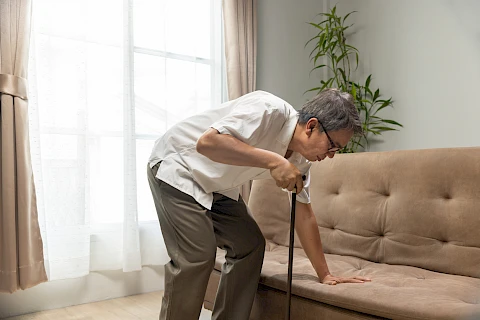
Sarnia or Petrolia, this is the right week to pay closer attention to how your parent is moving. Balance changes rarely show up as a single dramatic moment. They creep in as small habits, small injuries, and small comments you might otherwise miss. Here are six patterns worth watching for over the next month.
1. Furniture Surfing
Watch your mother walk from the living room to the kitchen. Does she brush the wall, tap the back of a chair, or place a palm on the counter as she passes? That is called furniture surfing. It is one of the earliest signs that the vestibular system or the legs are not quite trustworthy.
Note whether it is worse first thing in the morning. Bring that pattern to the next doctor's appointment.
2. New Bruises in Unexplained Places
A bruise on the shin. A scrape on the elbow. A tender spot on the hip that your father does not remember getting. Adults who are starting to catch themselves against furniture often collect these small injuries and forget where they came from.
Ask casually. If a parent brushes it off with "I bumped into the door," that may be true, or the door may be moving into paths it did not used to move into. According to the Public Health Agency of Canada, most injurious falls among seniors happen at home, and small marks are often the warning before a bigger one.
3. Refusing Invitations That Used to Be Fun
If a parent starts turning down invitations they always said yes to, ask why. The reason is sometimes balance, even when the person will not say so. A weekly church service becomes hard because the pew feels wobbly. A grandchild's soccer game becomes a no because the ground at the field feels uneven.
Withdrawal from favourite activities is a signal worth taking seriously. Some seniors feel embarrassed about their unsteadiness and quietly reshape their week to avoid situations that expose it.
4. Anecdotes That Hint at Dizziness
Listen for the small comments. "The bedroom spun for a second when I got up." "I felt woozy in the shower this morning." "I had to grab the shelf at the No Frills." Any of these, on their own, means little. Three in a month is a pattern.
Ask what the sensation actually felt like. Spinning, floating, and lightheadedness are three different symptoms with different causes. Doctors treat them differently.
5. Changes in How They Stand Up
A senior who is having more trouble with strength, mobility, or balance may start getting out of a chair differently. They rock forward two or three times to build momentum. They plant both hands on the armrests and push hard. They pause once they are up, one hand on furniture, before starting to walk.
That small pause is a tell. The vestibular system is calibrating. Watch for it after a nap, when it tends to be more noticeable.
6. Shorter, Wider Steps
A wider stance and shorter strides can sometimes be part of a more cautious walking pattern. You may also notice slower turns, hesitation before steps or curbs, or feet that do not lift as high as they used to.
Walking changes can have many causes, including reduced strength, joint problems, vision changes, neurological conditions, or balance difficulties. Rather than guessing why, make a note of what you see and bring it up with a healthcare professional. Poor balance, mobility changes, muscle weakness, and vision problems are all recognized contributors to fall risk.
What to Do Next in Sarnia and Petrolia
If two or more of these signs are on the list, call your parent's GP and ask for a balance assessment. A physiotherapist can also run a screen and recommend home exercises. Our team at Senior Helpers Sarnia-Lambton supports families across Sarnia and Petrolia with in-home care built around fall prevention, mobility support, and daily companionship for seniors who want to stay in their own homes. Contact us to talk about where a little extra day-to-day support could help your loved one feel more secure at home.