You've probably heard the term "low-impact activities" recommended for seniors, sometimes by a doctor, sometimes in a magazine, occasionally by a well-meaning family member. The advice keeps coming up. What's less common is a clear explanation of what the term actually means and why it matters for older adults who want to move more safely.
What "Low-Impact" Actually Refers To
Low-impact activities are those that put less force on seniors' joints, particularly their knees, hips, and spine, when their bodies make contact with the ground. High-impact activities like running or jumping involve moments where both feet leave the ground and land again. These can send a significant jolt through the skeletal system.
Low-impact activities keep at least one foot on the ground at all times, or remove the ground-contact issue entirely (as with swimming). The joints still get a workout, but without the repeated shock that can strain cartilage, aggravate arthritis, or increase fracture risk.
This distinction matters a great deal for seniors, especially those living with osteoporosis, arthritis, or recovering from joint replacement surgery. Families whose senior loved ones have been told to “be careful with exercise” often find that low-impact activity is exactly what doctors mean.
Low-Impact Activities for Seniors
A wider range of low-impact activities counts than most seniors expect:
- Walking (on flat terrain, at any pace) is the most accessible option. A morning walk around a neighbourhood fits the definition well.
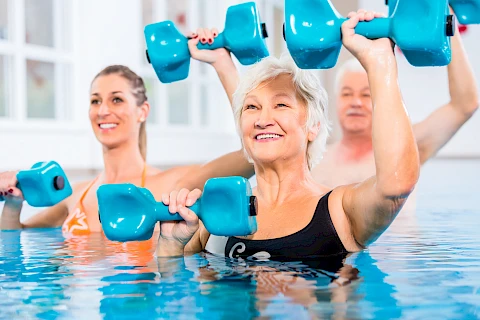
- Swimming and water aerobics are among the most joint-friendly options available, since buoyancy reduces effective body weight by up to 90 percent.
- Cycling, whether on a stationary bike or a trail, keeps the feet moving in a smooth arc without joint-jarring landings.
- Yoga and gentle stretching build flexibility and balance without impact.
- Tai chi has a growing evidence base showing it improves balance and lowers fall risk in older adults.
- Seated exercises with resistance bands or light weights are excellent for seniors with limited mobility.
Low-impact does not mean easy. A long swim or a brisk hour-long walk is low-impact but genuinely challenging. The label describes joint stress, not intensity.
Starting When Seniors Haven't Exercised in a While
The most common concern among seniors is whether it's too late or whether they'll hurt themselves. Neither worry is well-founded for most people.
Starting slowly and consistently is the approach that works. Begin with ten minutes of walking a day for the first week, then increase to fifteen minutes the next. Any new exercise program is worth a quick conversation with a doctor first. This helps identify any conditions to consider and provides clear approval that can encourage confidence to begin.
We Can Help Seniors Stay Active at Home
Staying physically active is easier with encouragement and consistent daily support. Senior Helpers Vaughan helps older adults across Vaughan, Thornhill, Oak Ridges, Aurora, and King City maintain their mobility and independence through professional in-home care. Contact us to find out how we can help your loved one stay active at home.