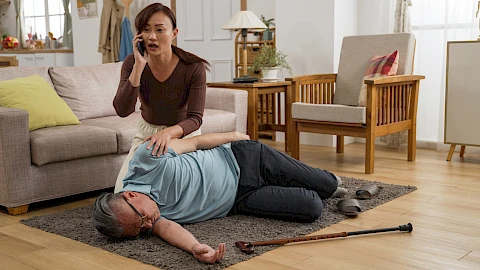
The thud from the next room is the part most caregivers remember. Knowing what to do when a senior falls can be hard to think through in that moment, and icy sidewalks add one more hazard in winter. Senior Helpers suggests spending 10 minutes on a plan now. By doing so, you'll know the first steps, when to call for help, and what to watch for over the following days.
Stay Calm and Check Before Moving Them
When a senior falls, the first instinct is to rush in and help them up. Take a breath first and check before moving them. Falling can be a frightening experience for an older adult. Here are a few things you can do before taking any action:
- Speak slowly and keep your voice low while asking where it hurts.
- Look for bleeding, signs of pain or confusion, or an arm or leg resting at an odd angle.
- Do not rush to pull them up. Doing it incorrectly, so it's better to wait than risk a back strain or injury to your senior loved one.
- If they say they're fine and can move without pain, let them rest on the floor for a few minutes with a pillow and blanket..
Calling for an Ambulance Without Second-Guessing
It's best to call emergency services immediately if your parent is experiencing the following:
- hit their head
- unconscious or confused
- trouble breathing
- severe pain
- can't move a limb
- bleeding heavily
When a senior falls, it’s always better to call than to leave someone on the floor for hours. While waiting, keep them warm and still, and don't give food or drink unless advised. Consider St. John Ambulance for first aid training to be better prepared in the future.
Helping Them Up When Safe
If there's no injury and the parent feels able, bring a sturdy kitchen chair close. Help it roll onto its side, then onto hands and knees. They can place their hands on the seat, bring one foot forward, and push up to sit. Steady the chair while they do this, and once seated, let them rest with a glass of water before moving to the next room.
The Hours and Days After a Fall
Even a fall without visible injuries requires attention, as issues may surface later. Proactive steps can safeguard your senior loved one's health and prevent future accidents.
- Contact the family doctor or Health811, which connects you with a registered nurse.
- Seek medical attention for any new confusion, drowsiness, or swelling over the next one or two days.
- Write down the time, the room, what they were doing, and whether they had slippers or socks on.
- This information helps the doctor identify causes, such as medication changes. It suggests at-home fixes, such as a dim hallway or a slippery bathroom floor.
- Ask your senior loved one how they feel about the fall, as many older adults may feel embarrassed and downplay it.
- Write out a simple plan together for next time and tape it to the inside of a cupboard door.
Steady Support When a Senior Falls
The weeks after a fall are when an extra set of hands counts most. In Hamilton and Burlington, Senior Helpers caregivers assist with daily routines, light housekeeping, errands, and transportation, while keeping you informed about your parent's well-being. Contact us to line up help for the weeks of recovery ahead.