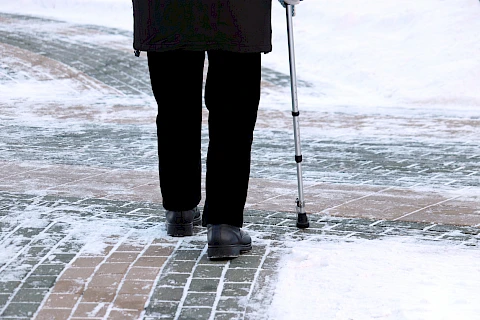
The first icy sidewalks of the season can appear overnight. Seniors may walk to nearby stores in regular shoes one week, only to find slippery patches from melting snow on driveways and walkways the next. November is Fall Prevention Month in Canada, making it a good time to prepare winter footwear and check mobility aids, such as canes, before temperatures drop further. Taking these steps early is an important part of ice and snow safety for seniors and can help reduce the risk of winter falls.
Boots That Actually Grip
Choosing proper footwear and traction aids is an important part of ice and snow safety for seniors. Look for winter boots with wide, flat heels and soft rubber soles with deep treads for better grip. Hard plastic soles can become stiff in cold weather and increase the risk of slipping. Boots should fit comfortably over winter socks and fasten easily. Long, loose laces can also create a tripping hazard.
Slip-on ice grips with metal studs or coils provide extra traction on packed snow and ice. Seniors should put them on while seated and remove them before walking on indoor tile or wood floors, where the grips can become slippery.
Canes and Walkers in Winter
Seniors who use canes can attach an ice tip with metal prongs for better grip on slippery surfaces. Indoors, they can fold the prongs out of the way. Walkers can be harder to use on snow because wheels may clog or skid. However, some seniors keep a walker indoors and use cleared paths outdoors. A physiotherapist or family doctor can also check whether a mobility aid has the right height and features for winter use.
For more information on preventing falls at home and outdoors, the Public Health Agency of Canada offers fall and injury prevention resources for older adults. These tips promote safer movement during winter and reduce fall risks for older adults.
Walking Like a Penguin
It may look unusual, but this walking technique works. Seniors can bend their knees slightly, point their feet outward, and take short, flat steps with their weight centred over their front foot. Keeping both arms free also improves balance, so carrying groceries in a backpack and keeping hands out of pockets are safer choices.
Getting in and out of a car also requires care. Seniors should sit first before swinging both legs inside. Black ice can also form in parking lots and near curbs, where melting snow refreezes after dark.
Parachute, a national injury prevention charity, provides fall-prevention resources for older adults and caregivers. These recommendations also support ice and snow safety for seniors.
When the Errand Can Wait
Ice and snow safety for seniors also means knowing when to stay indoors. Freezing rain, sudden temperature drops after a thaw, and uncleared sidewalks can make outdoor trips risky. Most errands can wait until conditions improve. Seniors can check the forecast before scheduling appointments, ask neighbours for a ride, or arrange grocery delivery when sidewalks become slippery. Rescheduling non-urgent activities is also a sensible choice during icy conditions.
Keeping extra food and regular medications at home can prevent unnecessary trips during prolonged bad weather. Seniors who live alone can also arrange daily calls with friends or relatives. This way, someone stays informed about power outages or falls.
Senior Helpers Supports Ice and Snow Safety for Seniors
When front steps become icy, a caregiver from Senior Helpers Canada can pick up groceries, drive seniors to appointments, accompany them to the car, or spend time with them over a crossword while waiting for warmer weather. Not sure there's an office near you? Senior Helpers Canada can check which one serves your community. Contact us, and we'll point you in the right direction.