Visibility in Alzheimer's and Dementia Care: Seeing the Whole Picture
Skip main navigation
Type Size
Past main navigation Contact Us

Visibility in Alzheimer's and Dementia Care: Seeing the Whole Picture

Think of the staircase in a parent's house. You've climbed it a thousand times. For some people living with dementia, depth, edges, and contrast can be hard to read, so that same staircase can look different than it used to.

November is Fall Prevention Month in Canada, led by Parachute, the national injury prevention charity. It's also the month our team has been talking about visibility, an idea that began with a bright lime green polo and one of our franchise owners, Michael Mohl. The two ideas fit together better than you might expect.

Below: the story behind the polo, what we mean by visibility, and a room-by-room look at making a home easier to see and safer to move through.

The lime green polo behind the idea

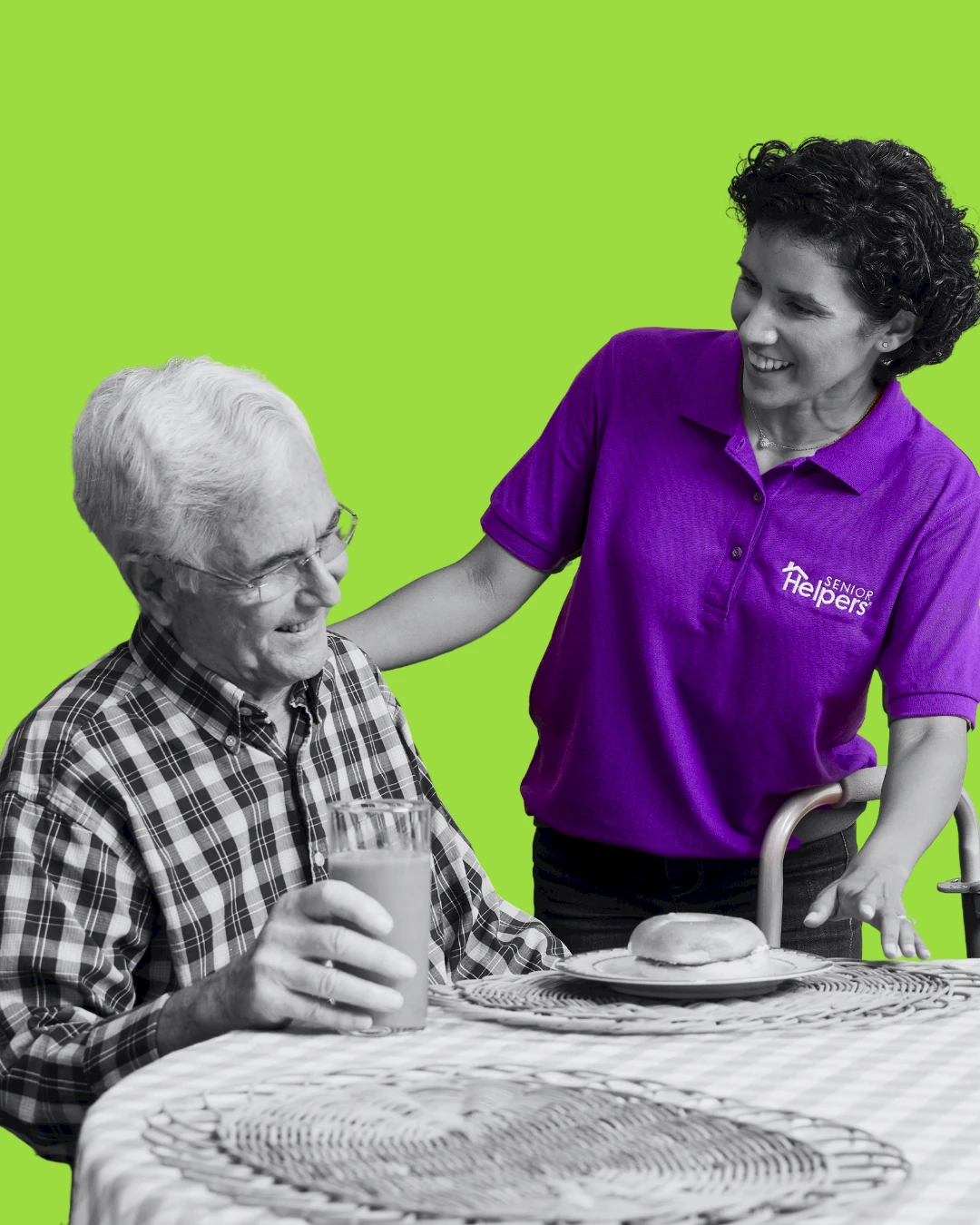
Michael Mohl, LTCCP & PAC Certified Dementia Educator, is a Senior Helpers franchise owner who requires his care team that works with seniors living with Alzheimer's and dementia to wear high-contrast lime green shirts. He is a certified trainer in Teepa Snow's Positive Approach to Care, is certified to provide the Virtual Dementia Tour through Second Wind Dreams, and has trained first responders. His commitment to home care began with watching his grandparents receive care that fell short of what they needed.

Here's the thinking behind the bright green. Dementia changes how the brain processes what the eyes see: many people living with dementia lose some colour perception and contrast sensitivity, so muted shades can blend together. Dementia-care guidance recommends bright, high-contrast colours to make important things easier to see.

Michael wants his caregivers to be easy for the people they care for to see, so he chose a bright, high-visibility green.

What interests us is where it led. Over time, that green has come to stand for the attention his team brings to every detail of a person's care, and for the expertise behind it. When a family sees that green, they see people who know what they are doing.

That got us asking a bigger question. If a colour can help a family recognize the person who knows what they're doing, what else in a person's world could be made easier to see?

What we mean by visibility

We use the word two ways.

The first is literal. Dementia can change how a person understands what they see. The Alzheimer Society of Canada lists challenges understanding visual and spatial information among its 10 warning signs of dementia, and it notes that changes with dementia can include decreased balance and reaction time, as well as visual-perceptual problems.

The second is figurative: who gets noticed. The Alzheimer Society of Canada reports that more than 770,000 people are living with dementia in Canada. In each of those families, attention tends to go to the diagnosis and the appointments, and two people are the most likely to slip out of view: the person living with dementia, and the person caring for them. We will come back to that caregiver, because their struggle is easy to overlook and important to see.

Why this matters in November: Fall Prevention Month

Falls are the leading cause of injury among Canadians 65 and over, according to the Public Health Agency of Canada, and between 20% and 30% of seniors living in the community fall each year. Parachute reports that of adults over 65 who are hospitalized after a fall, only half are discharged home. The Alzheimer Society of Canada adds that people living with dementia are especially at risk of falling.

Falls have many causes, and Parachute's advice for older adults reflects that: stay active and work on balance, get enough sleep, eat and hydrate well, have your sight and hearing checked regularly, review medications with a pharmacist or healthcare provider, wear sturdy, well-fitting shoes, and make sure hallways, stairs, and walkways are properly lit. Visibility is one piece of that. It's a piece you can start working on today.

Why does visibility connect to falls? The Safe Living Guide notes that with age, eyes take longer to adjust between dark and light, depth perception declines, and contrasts can be harder to perceive. Add the visual-perceptual changes that can come with dementia, and a step edge that blends into the floor, a shadowy hallway, or a dark rug that looks like a hole can be genuinely hard to read.

A room-by-room look at making hazards easy to see

None of this replaces a professional assessment. The Alzheimer Society of Canada suggests asking an occupational therapist to do a home safety assessment, and you can find one through the Canadian Association of Occupational Therapists. In the meantime, here's where to look.

Stairs

  • Make sure stairs are well lit.
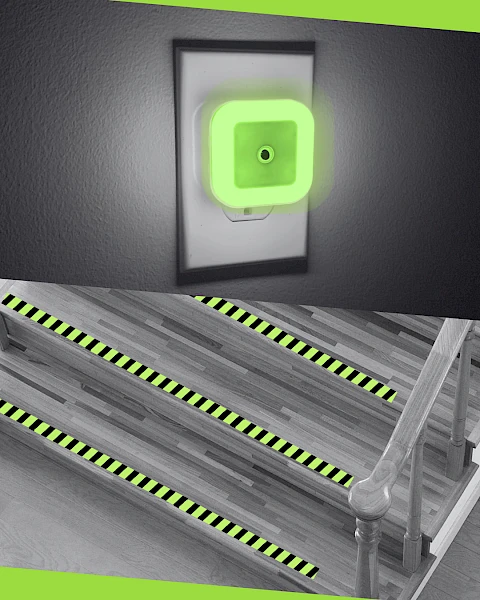
  • Put a strip of contrasting colour on the edge of each step so the edges stand out.
  • Use a contrasting colour at the start of the staircase, and make sure there is a sturdy railing.

Hallways and the night route

  • Use night lights, especially along the route from the bedroom to the bathroom.
  • Reduce dark areas and shadows. Low light and shadows can make familiar rooms look confusing.

Floors and rugs

  • Remove loose rugs and clutter from walkways.
  • Avoid dark rugs. A dark rug may look like a hole to someone living with dementia.

Bathroom and kitchen

  • Add grab bars in the bathroom, ideally in a colour that contrasts with the wall.
  • At the table, a plate that stands out from the tablecloth may be easier to see. In one small study of people with advanced Alzheimer's, bright, high-contrast tableware was linked to more eating and drinking. Later studies have been small and mixed, so treat this as an idea to try, not a promise.

Every home and every person is different. Start with one room, and ask an occupational therapist if you're unsure.

See the caregiver: the toll they carry

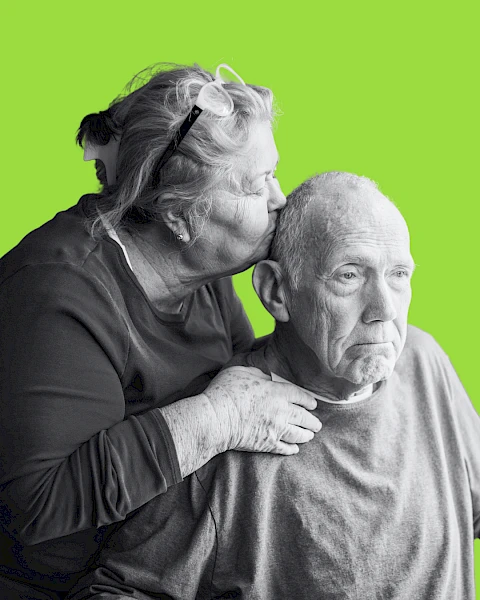
Visibility is not only about the person living with dementia. It is also about the person beside them, who is often the hardest to see. In most families, attention goes to the diagnosis and the appointments, and the caregiver quietly absorbs the rest.

The strain is real and measurable. The Canadian Institute for Health Information reports that more than 4 in 10 caregivers of seniors with dementia, about 45%, show symptoms of distress such as anger, depression, or an inability to continue their caring role. That is nearly double the rate for caregivers of seniors without dementia. These caregivers also provide more of their time, an average of 26 hours a week compared with 17.

The Alzheimer Society of Canada puts it plainly: providing care can take a tremendous toll on a caregiver's physical and emotional health, and many caregivers do not recognize the warning signs in themselves. Exhaustion, pulling back from friends, a shorter temper, and a sense that nothing you do is enough are common, and they are signals to get support, not signs of failing.

Seeing the caregiver means naming that toll and making room for help: a few hours of respite, a check-in from family, or a conversation with a doctor. You do not have to be running on empty to deserve support.

A fall-prevention guide for caregivers

A fall-prevention guide for caregivers

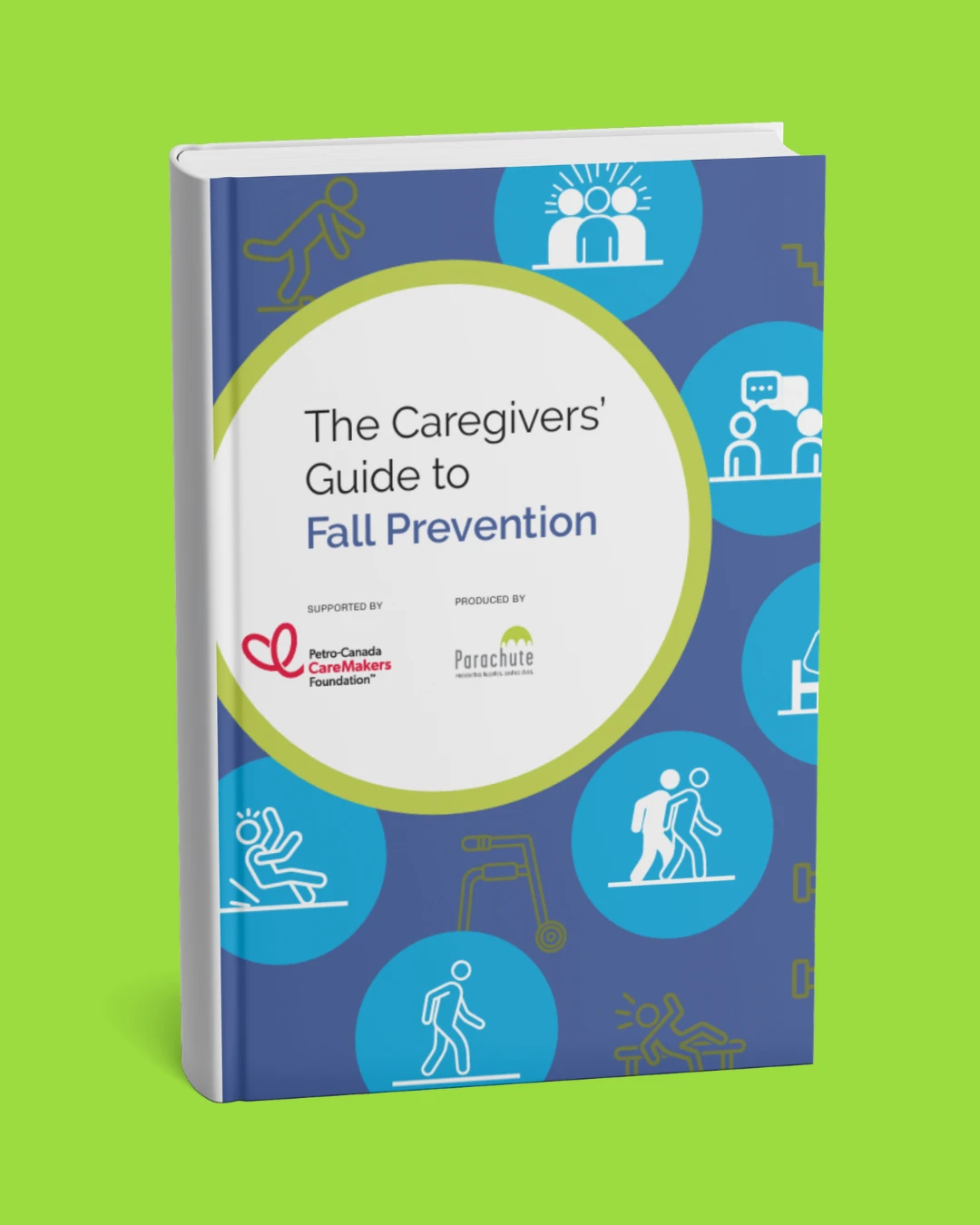
Parachute released its Caregivers' Guide to Fall Prevention earlier this year, and we think it's one of the most practical resources a family caregiver can have this month. It covers how to understand a person's fall risk, how to prevent falls, and how to help someone safely if they do fall. It advises against lifting a person who has fallen and walks you through what to do instead. It also includes tools like a personal fall risk questionnaire and a Fall Action Plan. You can download it as a printable PDF or listen to it as audio.

Parachute's own description of the guide makes a point we agree with: caregivers aren't always given the attention they deserve as an essential part of preventing falls. And the Alzheimer Society of Canada notes that providing care can take a tremendous toll on a caregiver's physical and emotional health, and that many caregivers don't recognize the warning signs in themselves. If that's you, you're part of this conversation too.

GET GUIDE HERE

See the person, not just the risk

A home safety plan can make someone feel like a list of hazards. It shouldn't. The Alzheimer's Association's communication guidance is a good reminder: don't make assumptions about what a person can do because of a diagnosis, speak to them directly, give them time to respond, and ask what they're still comfortable doing and where they'd like help.

Senior Helpers' approach to dementia care, Senior Gems®, was created by Senior Helpers and puts a person's abilities ahead of their limitations, focusing on what is precious and unique about each person.

How Senior Helpers Fits Into View

Everything above is true whether or not a family ever calls us. But seeing people well is also what we are built to do, so here is where we fit.

Senior Gems®: seeing what remains

Our approach to Alzheimer's and Dementia Care, Senior Gems®, was created by Senior Helpers. Its central idea is the one we have been describing: focus on what a person can still do, not only on what has been lost, and on what is precious and unique about each person. Senior Gems® helps our caregivers recognize the stage a person is in and adjust how they connect.

LIFE Profile™: seeing the risks before they happen

We also look closely at the home and the whole picture of a person's life through our LIFE Profile™ assessment, a data-driven tool that helps spot the risks that lead to falls and hospital stays, from the layout of a room to who checks in and how often. It is the difference between reacting to a fall and seeing the risk in advance.

Services vary by location, so your local office can tell you which programs are available in your community.

Making hazards easy to see

Visibility is about seeing the step. It is also about seeing the person on it, and the person beside them.

If you're caring for someone with dementia, you don't have to figure it out alone. Senior Helpers provides non-medical in-home care for older adults, including Alzheimer's and Dementia Care, companion care, personal care, and respite care, along with help with home safety, fall prevention, and daily routines. Services vary by location, so your local office can tell you what's available in your community. You can also take our short "Is Home Care Right for Me?" quiz or learn more about our memory care services.

Find a Senior Helpers Near Me

Frequently asked questions

When is Fall Prevention Month in Canada?

November. Parachute, Canada's national injury prevention charity, leads the campaign each year.

Can lighting and contrast really help prevent falls at home?

Canadian guidance recommends them. The Public Health Agency of Canada suggests well-lit stairs and a contrasting strip on step edges, and the Alzheimer Society of Canada recommends good lighting, fewer shadows, and night lights for people living with dementia. Falls have many causes, so these changes work best alongside exercise, medication reviews, sight and hearing checks, and proper footwear.

Why are people living with dementia at higher risk of falling?

The Alzheimer Society of Canada says they are especially at risk, and notes that changes with dementia can include decreased balance and reaction time as well as visual-perceptual problems.

Who can do a home safety assessment?

An occupational therapist can. You can find one through the Canadian Association of Occupational Therapists, and a doctor can also point you in the right direction.

Why do some Senior Helpers caregivers wear lime green?

It's the practice of Michael Mohl, a Senior Helpers franchise owner. Dementia can reduce colour perception and contrast sensitivity, so bright, high-contrast colours are easier to see, and Michael wants his caregivers to be easy for the people they care for to spot. Over time the bright green has also come to stand for the care and expertise his team brings. It is his practice, not a medical treatment, and no study has tested caregiver clothing colour.

Where can caregivers find fall prevention resources?

Parachute's Caregivers' Guide to Fall Prevention is a good place to start. It's available as a printable PDF and in audio, and Parachute's Fall Prevention Month page lists more resources.